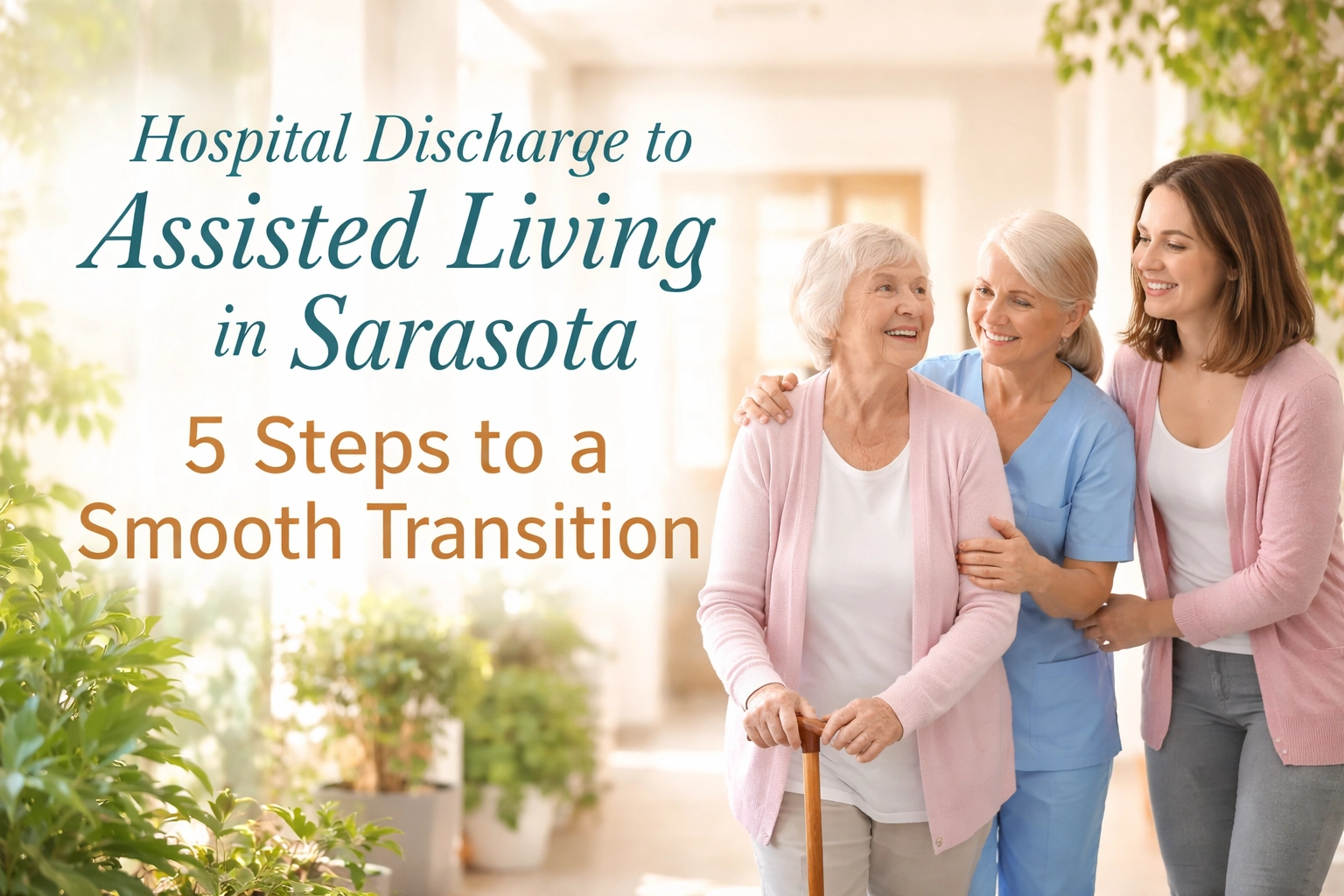
You just got the call. Your mom had a fall, or maybe your dad's recovery from surgery isn't going as planned. Now the hospital is talking about discharge, and suddenly you're facing a decision you never thought you'd have to make this fast.
If this sounds familiar, take a breath. You're not alone, and you don't have to figure this out by yourself.
Whether you're a family member scrambling to find assisted living in Sarasota or a hospital case manager looking for a reliable local partner, this guide breaks down the five essential steps to get your loved one (or patient) safely transitioned from hospital to assisted living, without the chaos.
Why Hospital-to-Assisted-Living Transitions Feel So Overwhelming
Here's the reality: most families don't plan for this moment. One day everything seems fine, and the next you're being told your loved one can't safely return home. The hospital discharge team is asking questions, paperwork is piling up, and you have maybe 48-72 hours to make a major life decision.
The good news? With the right steps, and the right support, this transition can actually go smoothly. Let's walk through it together.
Step 1: Connect with the Hospital Discharge Planner Immediately
The moment you learn your loved one may need senior living in Sarasota or surrounding areas after their hospital stay, ask to speak with the discharge planner. This person is your first point of contact and can be incredibly helpful.
What the discharge planner does:
- Coordinates the discharge timeline
- Provides referrals for post-acute care or assisted living
- Helps determine whether skilled nursing is needed before assisted living
- Connects you with social workers and resources
Don't wait for them to come to you. Ask the nursing staff to schedule a meeting as soon as possible. The earlier you start this conversation, the more options you'll have.
Pro tip for case managers: If you're a discharge planner or social worker in Sarasota or Bradenton, having a trusted local placement advisor on speed dial can save you hours of legwork. More on that in a moment.

Step 2: Understand Your Loved One's Post-Hospital Care Requirements
Before you can find the right community, you need to know exactly what level of care your loved one needs. This is where the hospital discharge notes become essential.
A complete discharge plan should include:
- Medical evaluation results
- Post-hospital care instructions
- Follow-up appointments and lab tests
- Physical or occupational therapy needs
- Medication management plan
- Nutritional requirements
- Any special equipment (walkers, oxygen, hospital beds)
- Transportation arrangements
Review these documents carefully. If something doesn't make sense, ask questions. You need to understand whether your loved one requires:
- Assisted living – Help with daily activities like bathing, dressing, and medication reminders
- Memory care – Specialized support for Alzheimer's or dementia
- Skilled nursing – Short-term rehab before transitioning to assisted living
Understanding these distinctions will help you find the right fit. If you're unsure where to start, our care assessment tool can help clarify what level of care makes sense.
Step 3: Identify and Tour Appropriate Assisted Living Communities
Now comes the part that feels the most daunting: finding the right place.
There are dozens of assisted living facilities in Sarasota and assisted living in Bradenton, each with different price points, care levels, amenities, and personalities. How do you possibly evaluate them all in 48 hours?
Here's what to focus on:
- Care capabilities – Can they handle your loved one's specific medical needs?
- Staff-to-resident ratio – More staff usually means better attention
- Location – Is it convenient for family visits?
- Cost and payment options – What's included vs. what costs extra?
- Community feel – Does it feel warm and welcoming?
If time allows, schedule tours (virtual or in-person). Pay attention to how staff interacts with residents. Trust your gut.
The reality: Most families don't have time to tour 10+ communities while juggling hospital visits, work, and life. This is exactly why many families, and referral sources, turn to a local senior living advisor.

Step 4: Complete Admission Paperwork and Finalize Placement
Once you've identified the right community, the clock starts ticking on paperwork. In urgent discharge situations, you may need to finalize everything within 48-72 hours.
What to expect:
- Admission application and agreements
- Medical records transfer
- Insurance verification and pre-authorization
- Financial documentation (if applying for assistance programs)
- Personal inventory of belongings to bring
Don't forget to ask about financial assistance. Programs like Medicaid's Assisted Living Waiver or Veterans Benefits may help offset costs. The community's admissions team, or a placement advisor, can point you in the right direction.
For case managers coordinating multiple discharges, having a local partner who knows which communities have immediate availability and can handle the paperwork coordination is invaluable.
Step 5: Arrange Transportation and Plan for Follow-Up Care
The physical move is just the beginning. The first 30 days after hospital discharge carry the highest risk of readmission, so follow-up care is critical.
Before discharge day:
- Arrange medical transportation to the new community
- Confirm all follow-up appointments are scheduled
- Ensure medications are filled and ready
- Create a contact list with doctors, family members, and community staff
After move-in:
- Check in regularly during the first few weeks
- Communicate any concerns to the care team immediately
- Watch for signs of adjustment struggles (confusion, withdrawal, appetite changes)
A smooth transition doesn't end at the front door. Stay engaged, ask questions, and advocate for your loved one.

You Don't Have to Do This Alone
Here's something many families don't realize: you can get expert help navigating this entire process, completely free.
At Assisted Living Locators of Sarasota, we provide a personal advocate who handles the logistics for you. We know the senior living communities in Sarasota, Bradenton, Lakewood Ranch, and Venice inside and out. We know which communities have availability right now, which ones specialize in certain care needs, and which ones fit your budget.
What we do for families:
- Assess your loved one's care needs
- Recommend communities that are the right fit
- Schedule and accompany you on tours
- Help coordinate the transition from hospital to assisted living
- Provide ongoing support even after move-in
And yes, our service is 100% free to families. We're compensated by the communities, not by you.
For hospital case managers and referral sources: We're your local boots-on-the-ground partner. When you need a fast, reliable placement for a patient being discharged, we can mobilize quickly and keep you updated every step of the way. Learn more about working with us.
Ready to Take the Next Step?
If you're facing a hospital discharge situation right now: or you want to be prepared before a crisis hits: we're here to help.
Take our care assessment to get personalized recommendations, or contact us directly to speak with a local advisor today.
You don't have to navigate assisted living in Sarasota alone. Let us be your guide.
Leave a Reply