Choosing senior care for a parent can feel overwhelming. You may be comparing assisted living, memory care, nursing homes, and in-home care while trying to understand what your loved one truly needs.
The good news is that you do not have to make the decision alone.
This guide compares assisted living and skilled nursing in Sarasota, Bradenton, and Lakewood Ranch. You will learn:
- Who each care level is designed for
- What daily life may look like
- What services are usually included
- Typical 2026 monthly costs
- How Florida licensing differs
- When in-home care may still be a good middle option
- Signs your parent’s needs may have outgrown assisted living
The short answer: assisted living is residential support, while nursing homes provide skilled medical care
Assisted living is usually a good fit for an older adult who needs help with daily activities but does not need constant medical monitoring.
A nursing home, sometimes called a skilled nursing facility or SNF, is designed for someone with more complex medical needs. This may include rehabilitation after a hospital stay, ongoing wound care, frequent nursing treatments, or conditions that cannot be safely managed in assisted living.
Here is a simple comparison:
| Assisted Living | Nursing Home or Skilled Nursing | |
|---|---|---|
| Main purpose | Help with daily living in a residential setting | 24-hour nursing and medical care |
| Typical resident | Medically stable but needs support | Needs complex, ongoing, or post-hospital care |
| Common services | Meals, housekeeping, activities, bathing, dressing, medication support | Skilled nursing, rehabilitation, wound care, complex medication management |
| Setting | Apartment or private room with shared community spaces | Clinical care setting with private or semi-private rooms |
| Typical 2026 local cost | About $4,500–$6,500 per month | About $9,000–$12,000+ per month |
| Florida license | Assisted Living Facility license under Chapter 429 | Nursing home license under Chapter 400 |
These are general guidelines. Your parent’s diagnosis alone does not determine the right setting. Their daily abilities, safety risks, medical needs, and personal preferences all matter.
Who is a good fit for assisted living in Sarasota?
Assisted living may suit your parent if they can no longer manage everything safely at home but do not need 24-hour skilled nursing.
Your parent may be a good candidate if they need help with:
- Bathing, dressing, or grooming
- Toileting
- Medication reminders or medication administration
- Meal preparation and nutrition
- Housekeeping and laundry
- Transportation to appointments
- Mobility and fall prevention
- Social connection and daily structure
Many assisted living communities in Sarasota, Bradenton, and Lakewood Ranch have staff available around the clock. However, that does not mean every community provides continuous nursing care. Staffing and services vary by community and license type.
Some communities also offer specialized memory care in Sarasota for people living with Alzheimer’s disease or another form of dementia. Memory care usually adds secure environments, dementia-trained staff, and structured activities.
What daily life looks like in assisted living
Assisted living is designed to feel more like a home or community than a medical facility.
A typical day may include:
- Breakfast and meals in a shared dining room
- Help with morning routines
- Medication support
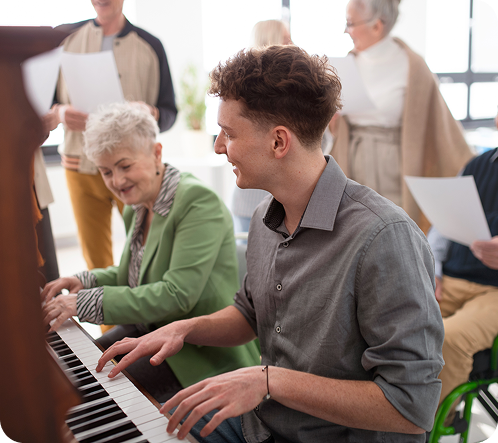
- Exercise, games, crafts, or music
- Transportation to appointments or shopping
- Rest time in a private apartment or room
- Social activities and evening meals
Your parent may have more independence than they would in a nursing home. They can often choose when to participate in activities, spend time in their apartment, or visit common areas.
Learn more about local options on our assisted living in Sarasota and Manatee Counties page.
Who may need a nursing home or skilled nursing?
A nursing home may be more appropriate when your parent needs clinical care that assisted living cannot safely provide.
This may include:
- 24-hour nursing oversight
- Frequent monitoring of an unstable medical condition
- Complex wound care
- IV medications or other skilled treatments
- Rehabilitation after surgery, stroke, or serious injury
- Significant physical limitations
- Extensive help with all activities of daily living
- Ongoing care that cannot be coordinated safely at home
It is important to understand the difference between long-term nursing home care and short-term skilled nursing rehabilitation.
A parent may enter a skilled nursing facility for several weeks after a hospitalization. The goal may be to regain strength, improve mobility, or recover from an injury. Other residents may need long-term nursing home care because of chronic medical conditions or increasing physical needs.
What daily life looks like in a nursing home
Nursing homes generally have a more clinical routine. Nurses and certified nursing assistants provide care throughout the day and night. Physical, occupational, or speech therapy may be part of the care plan.
A typical day may include:
- Assistance with bathing, dressing, and toileting
- Medication administration
- Nursing assessments
- Therapy sessions
- Wound care or other treatments
- Meals designed around medical and nutritional needs
- Rest periods
- Activities and social programs
Nursing homes can provide peace of mind when your parent needs a level of care that family members, home caregivers, or an assisted living community cannot safely provide.
You can learn more about this care level on our nursing homes in Sarasota and Manatee Counties page.
What is included in the monthly cost?
Pricing varies by location, apartment or room type, care level, and services. Ask every community for a complete fee schedule.
Assisted living costs in 2026
For Sarasota, Bradenton, and Lakewood Ranch, a reasonable planning range for assisted living is approximately $4,500 to $6,500 per month.
Some communities may be less expensive. Newer or higher-end communities may cost more. Memory care commonly falls toward the upper end of the range or above it.
The base price may include:
- Apartment or room
- Utilities
- Meals and snacks
- Housekeeping
- Laundry
- Activities
- Transportation on a set schedule
- Emergency call system
- Basic assistance with daily activities
Additional fees may apply for:
- Higher levels of personal care
- Two-person transfers
- Medication administration
- Incontinence care
- Specialized memory care
- Additional transportation
- Private nursing or therapy services
Review our assisted living cost guide for more information.
Nursing home costs in 2026
In the local Sarasota–Bradenton–Lakewood Ranch market, nursing home care may range from approximately:
- $9,000–$10,500 per month for many semi-private rooms
- $10,500–$12,000 or more per month for private rooms or higher-acuity care
Some published Sarasota estimates vary based on room type and whether they describe short-term rehabilitation or long-term care. For example, Caring.com’s Sarasota nursing home guide provides local cost information, but you should always request a current quote directly from the facility.
Nursing home rates often include more medical care than assisted living. Still, ask whether therapy, physician services, supplies, or special treatments are billed separately.

How Florida licensing differs
Both care types are regulated by the Florida Agency for Health Care Administration, or AHCA. However, they operate under different laws and licensing requirements.
Assisted Living Facilities
Florida assisted living facilities are licensed under Chapter 429, Part I, Florida Statutes. A standard assisted living license allows a community to provide housing, meals, personal care, supervision, and limited health services.
Some communities have additional specialty licenses or designations. These may allow them to provide a higher level of support, such as:
- Limited nursing services
- Extended congregate care
- Memory care services
- Limited mental health services
Even with specialty services, assisted living is not the same as a nursing home. A community must be able to safely meet a resident’s needs under its license and staffing model.
You can review information about Florida assisted living regulation through AHCA’s Assisted Living Unit.
Nursing Homes and Skilled Nursing Facilities
Nursing homes are licensed under Chapter 400, Part II, Florida Statutes. They are designed to provide 24-hour nursing care for people with higher medical needs.
Facilities that participate in Medicare or Medicaid must also meet federal requirements. These include rules related to resident rights, quality of care, infection control, staffing, and clinical services.
The word “skilled” generally refers to the level of nursing or therapy required. It does not necessarily mean that every nursing home resident is receiving short-term rehabilitation. Some people receive skilled nursing temporarily. Others need long-term nursing home care.
Signs your parent’s needs may have outgrown assisted living
A change in care needs does not always mean an emergency move. However, it does mean the care plan should be reviewed.
Talk with your parent’s doctor and care team if you notice:
- Repeated falls or injuries
- Frequent emergency room visits
- Unmanaged pain or worsening symptoms
- New or worsening wounds
- Difficulty swallowing or maintaining nutrition
- A need for frequent medical treatments
- Increasing help with transfers or repositioning
- Changes in behavior that create safety concerns
- Staff reporting that your parent needs more help than the community can provide
- Your parent spending most of the day in bed or needing total assistance
A parent with dementia may not automatically need a nursing home. A secure memory care community may be appropriate if the primary concern is supervision, wandering, or cognitive support. The right choice depends on both medical needs and safety needs.
When in-home care still makes sense
In-home care can be a helpful middle option. It may allow your parent to remain at home while receiving support during the times they need it most.
In-home care may work well when your parent:
- Needs help for only a few hours each day
- Has family nearby who can provide some support
- Is safe at home with supervision
- Needs help with meals, bathing, errands, or companionship
- Is recovering from an illness or hospital stay
- Prefers to remain in familiar surroundings
In 2026, private-pay home care in the Sarasota area often ranges from about $24 to $30 per hour. Agency care in Bradenton and Lakewood Ranch may commonly range from about $30 to $40 per hour, depending on the caregiver’s role and the complexity of care.
At higher hourly needs, in-home care can become more expensive than assisted living. It may also be difficult to coordinate overnight coverage, weekends, backup caregivers, and emergencies.

How to choose the right care level
Start by writing down what your parent needs help with each day. Include:
- Bathing and dressing
- Toileting
- Walking and transfers
- Medications
- Meals and hydration
- Memory and supervision
- Medical treatments
- Transportation
- Overnight needs
Then take our free senior care needs assessment. It can help organize your concerns and identify questions to discuss with a doctor or care professional.
At Assisted Living Locators of Sarasota, our local senior care advisors can help you compare assisted living, memory care, nursing homes, and in-home care in Sarasota, Bradenton, and Lakewood Ranch. We can help evaluate needs, create a shortlist, coordinate tours, compare pricing, and support your family through the transition.
Finding senior living is complicated. You deserve clear information and a plan that fits your parent: not a rushed decision.
Contact us for a free personalized needs evaluation. Our guidance is offered at no cost to families, and there is no pressure to choose a particular community.
Leave a Reply