If you're researching senior living options for your parent in Sarasota, you've probably come across two terms that sound similar but are actually quite different: assisted living and memory care.
Understanding the distinction matters. Choosing the right level of care affects your parent's safety, happiness, and quality of life. And let's be honest: it's a decision that can feel overwhelming when you're already worried about someone you love.
The good news? Once you know what to look for, the choice becomes much clearer.
Let's break down the differences so you can make the best decision for your family.
What Is Assisted Living?
Assisted living is designed for seniors who are mostly independent but need a helping hand with daily activities.
Think of it as a supportive environment where your parent can maintain their autonomy while getting assistance with things like:
- Bathing and personal hygiene
- Getting dressed
- Medication reminders and management
- Meal preparation
- Light housekeeping and laundry
- Transportation to appointments
Residents in assisted living Sarasota communities typically have their own apartments or private rooms. They enjoy social activities, dining with other residents, and coming and going as they please.
The key here? Cognitively, they're doing well. They might forget to take a pill or need help getting in and out of the shower, but they know where they are, recognize family members, and can communicate their needs.

What Is Memory Care?
Memory care is a specialized form of senior living designed specifically for people with Alzheimer's disease, dementia, or other memory-related conditions.
It's not just assisted living with a different name. Memory care communities are built from the ground up to support residents with cognitive challenges.
Here's what sets memory care apart:
- 24/7 specialized supervision from staff trained in dementia care
- Secured environments with controlled exits to prevent wandering
- Structured daily routines that reduce confusion and anxiety
- Therapeutic activities designed to stimulate memory and engagement
- Design features like circular hallways, enclosed outdoor spaces, and clear visual cues
Memory care Sarasota communities understand that residents may not always remember where they are or recognize familiar faces. The entire environment: from the layout to the lighting: is designed with their safety and comfort in mind.
The Key Differences: A Side-by-Side Look
Still not sure which one fits your parent's situation? Here's a quick comparison:
| Feature | Assisted Living | Memory Care |
|---|---|---|
| Primary Focus | Help with daily activities | Specialized dementia/Alzheimer's care |
| Cognitive Requirements | Generally intact | Significant memory impairment |
| Staff Training | General senior care | Dementia-specific training |
| Security | Standard | Secured with controlled access |
| Environment | Apartment-style, independent | Structured, safety-focused design |
| Daily Structure | Flexible | Highly structured routines |
| Cost | Lower | Higher due to specialized care |
Both options provide meals, activities, and support. The difference comes down to the level of cognitive care and security your parent needs.
Security and Safety: Why It Matters
One of the biggest factors families consider when choosing between assisted living and memory care is safety.
If your parent has been diagnosed with dementia or Alzheimer's, wandering is a real concern. According to the Alzheimer's Association, six in ten people with dementia will wander at some point. In Florida's warm climate, this can become dangerous quickly.
Memory care communities in Sarasota are designed with this in mind:
- Secured entrances and exits that require codes or staff assistance
- Alarm systems on doors
- GPS tracking options for residents
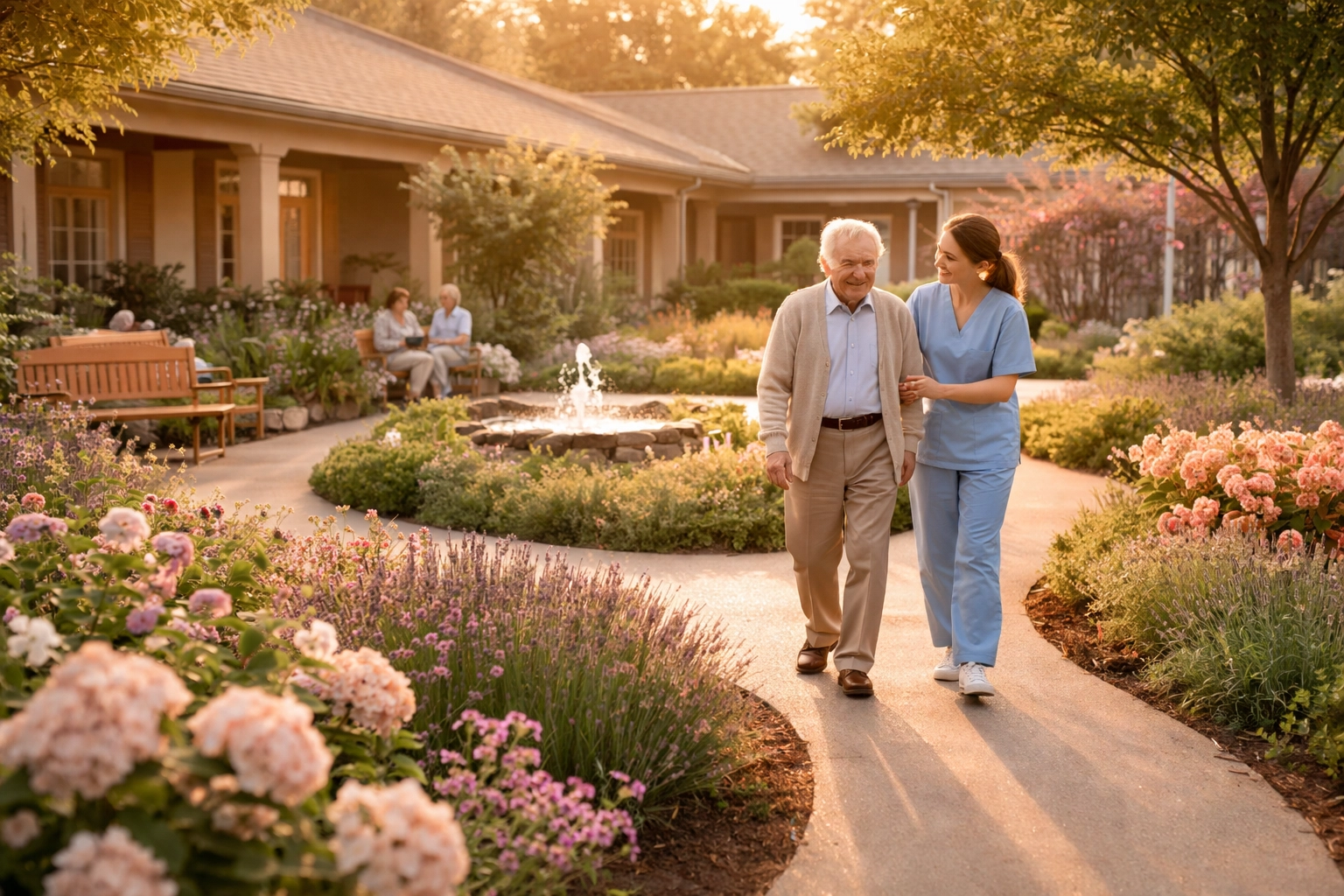
- Enclosed outdoor gardens where residents can enjoy fresh air safely
- Circular hallway designs that let residents walk freely without getting lost
Assisted living communities, on the other hand, allow residents more freedom to come and go. That's perfect for someone who's cognitively healthy: but it can be risky for someone experiencing memory loss.
Specialized Care: What Does That Really Mean?
When we talk about "specialized care" in memory care, we're talking about staff who understand dementia on a deep level.
Memory care team members are trained to:
- Communicate effectively with residents who may struggle to express themselves
- Redirect behaviors calmly and compassionately
- Recognize signs of agitation or distress before they escalate
- Create meaningful engagement through music, art, and sensory activities
- Support dignity and independence even as abilities change
This training makes a real difference. A staff member who understands dementia won't take it personally if a resident becomes confused or upset. They'll know how to respond in a way that calms and reassures.
In Sarasota, you also have access to specialized resources like The Roskamp Clinic, a research institute that specializes in memory disorders. If you're unsure whether your parent needs memory care, a comprehensive evaluation can help clarify the right path forward.
Signs Your Parent Might Need Memory Care
Sometimes the line between "forgetful" and "needs memory care" isn't clear. Here are some signs that memory care might be the better choice:
- Getting lost in familiar places (their own neighborhood, their home)
- Forgetting names of close family members or not recognizing them
- Difficulty following conversations or answering simple questions
- Unsafe behaviors like leaving the stove on or wandering outside at night
- Significant personality changes such as increased agitation, paranoia, or withdrawal
- Requiring constant supervision to stay safe
If your parent is experiencing one or more of these regularly, it's worth exploring memory care options. The structured environment and specialized staff can provide a level of safety and support that assisted living simply isn't designed to offer.
Signs Assisted Living Is the Right Fit
On the other hand, assisted living might be perfect if your parent:
- Needs help with physical tasks but is mentally sharp
- Wants to maintain independence in a social environment
- Can follow a medication schedule with reminders
- Enjoys activities and socializing with peers
- Doesn't require 24/7 supervision for safety
Many Sarasota seniors thrive in assisted living because it offers the right balance of support and freedom.
What About Cost?
Let's talk numbers: because budget matters.
Memory care typically costs more than assisted living due to the specialized staffing, enhanced security, and lower staff-to-resident ratios.
In Sarasota, you can expect:
- Assisted living to range from around $3,500 to $6,000+ per month depending on the community and level of care
- Memory care to range from around $5,000 to $8,000+ per month
These are general ranges. Actual costs depend on the specific community, room type, and care needs.
The good news? Many Sarasota senior living communities offer both assisted living and memory care on the same campus. This means your parent can transition smoothly if their needs change over time: without having to move to an entirely new location.
For more details on costs, check out our guides on assisted living costs and memory care costs in Sarasota.

How to Decide: Your Next Steps
Choosing between memory care and assisted living doesn't have to be a solo journey.
Here's what we recommend:
-
Get a professional assessment. If you're unsure about your parent's cognitive status, talk to their doctor or seek a memory evaluation.
-
Tour communities in person. Nothing beats seeing a community firsthand. Pay attention to how staff interact with residents.
-
Ask the right questions. What's the staff-to-resident ratio? What training do caregivers receive? What happens if my parent's needs change?
-
Consider future needs. Even if assisted living works today, think about whether your parent might need memory care down the road.
Not sure where to start? Take our free care assessment to get personalized recommendations based on your parent's specific situation.
We're Here to Help
At Assisted Living Locators of Sarasota, we help families like yours navigate these decisions every day. Our service is free to you, and we're local: we know the Sarasota, Bradenton, and Lakewood Ranch communities inside and out.
Whether your parent needs assisted living, memory care, or you're still figuring it out, we're happy to talk through your options.
Contact us today to schedule a free consultation. We'll help you find the right fit: no pressure, no stress.
Leave a Reply